

Gutter installation in Rockford, MI should begin with the roof rather than a one-size-fits-all gutter package. Roof area, pitch, valleys, run length, fascia condition, and downspout locations all affect how much water the system needs to move and where that water should leave the roofline.
At All Gutter Systems, we have served West Michigan since 1988 and provide seamless gutter installation throughout Rockford. We roll-form gutters on-site and offer multiple sizes, profiles, materials, and colors, giving homeowners more flexibility when replacing an undersized or worn-out system.
A successful installation is not simply about hanging new aluminum. The gutter, fascia, pitch, outlets, and downspouts need to work together so runoff has a clear path from the roof to the ground.
How Should a New Gutter System Be Sized for a Rockford Home?
A new gutter system should be sized around roof area, pitch, valleys, run length, and available downspout locations—not simply the width used on the neighboring house. We offer 5-, 6-, and 7-inch K-style gutters, so Rockford homeowners can match capacity to the roof instead of defaulting to one size.
Five-inch K-style gutter works well for many residential properties. However, a larger roof does not always distribute water evenly. A steep slope or roof valley can send a substantial amount of runoff into one short section.
Long runs also affect the design. If there are limited places to position downspouts, the gutter and outlet configuration may need additional capacity to keep water moving.
Six-inch gutters can make sense when the roof has a larger drainage area, steeper pitch, long uninterrupted runs, or valleys that concentrate runoff. Seven-inch systems are available for specialty applications where even more capacity is appropriate.
Downspouts are equally important. Installing a larger gutter while leaving too few outlets can still create a bottleneck. The estimate should therefore account for both the horizontal gutter and the route water takes after reaching each outlet.
The U.S. Department of Energy’s gutter and downspout guidance highlights appropriate sizing and drainage away from the foundation.
For rain gutter installation in Rockford, MI, sizing the complete drainage path gives homeowners a better starting point than assuming bigger gutters are automatically better.
Why Does Seamless Gutter Installation Matter on Longer Roof Runs?
Seamless gutters are roll-formed on site to the exact length of each straight roof run, which removes the recurring joints found in sectional systems. Fewer joints mean fewer places for sealant to age or leaks to develop. The result is a cleaner installation with sizing based on the actual home.

Sectional gutters are assembled from shorter pieces. Every connection along a straight run creates another joint that must remain sealed as the system ages.
With seamless gutter installation in Rockford, MI, we bring the roll-forming equipment to the property. Aluminum coil is formed into a continuous piece that matches the measured run rather than being assembled from standard store-bought sections.
Seamless does not mean a gutter system has no joints anywhere. Corners, end caps, outlets, and other transitions still require connections. However, removing unnecessary mid-run seams simplifies the system and reduces potential leak points.
Appearance is another consideration. We offer five gutter profiles and more than 60 colors, along with aluminum and copper options for certain styles. That allows the gutter to complement the roofline instead of looking like an unrelated add-on.
The right profile can also depend on the home itself. K-style works with many residential designs, while half-round and decorative profiles may better suit properties where the gutter is a more visible architectural feature.
For homeowners considering copper, the Copper Development Association provides technical details for hung copper gutters.

What Should Be Checked Before New Gutters Are Installed?
Before new gutters go up, the fascia, drip edge, soffit, roofline, and downspout path should be checked. New aluminum still needs solid material behind it and a clear route for water after it leaves the roof. Correcting weak fascia or poor discharge planning first helps the new system start with the right foundation.
Fascia deserves particular attention because it provides the mounting surface for the gutter. If sections are soft, rotted, or otherwise deteriorated, simply covering them with new metal does not restore their ability to support the system.
The roofline should also be reviewed for the areas that will send the most water toward the gutter. Important installation factors include:
- Roof valleys that concentrate runoff into short sections
- Long gutter runs with limited downspout locations
- Fascia that needs repair before new gutters are secured
- Existing drip-edge conditions along the roof edge
- Downspout locations and where discharged water will go
This planning stage can also prevent homeowners from buying unnecessary upgrades.
For example, recurring overflow does not automatically mean a home requires the largest available gutter. An undersized outlet or poorly placed downspout may be the more important limitation.
Likewise, gutter guards solve a different problem. They help control debris but do not increase the underlying drainage capacity of an undersized system. Installation planning should address water volume first and debris management separately.
That distinction gives a new system a specific job: collect runoff efficiently, move it toward the outlets, and discharge it through a properly planned downspout layout.

What Happens During Gutter Installation With All Gutter Systems?
We start with measurement and system design, then roll-form seamless gutter at the property for each roof run. Our own full-time crews install, pitch, seal, and water-test the system before cleanup. Homeowners receive a written estimate that identifies the planned gutter size, profile, color, and downspout layout.
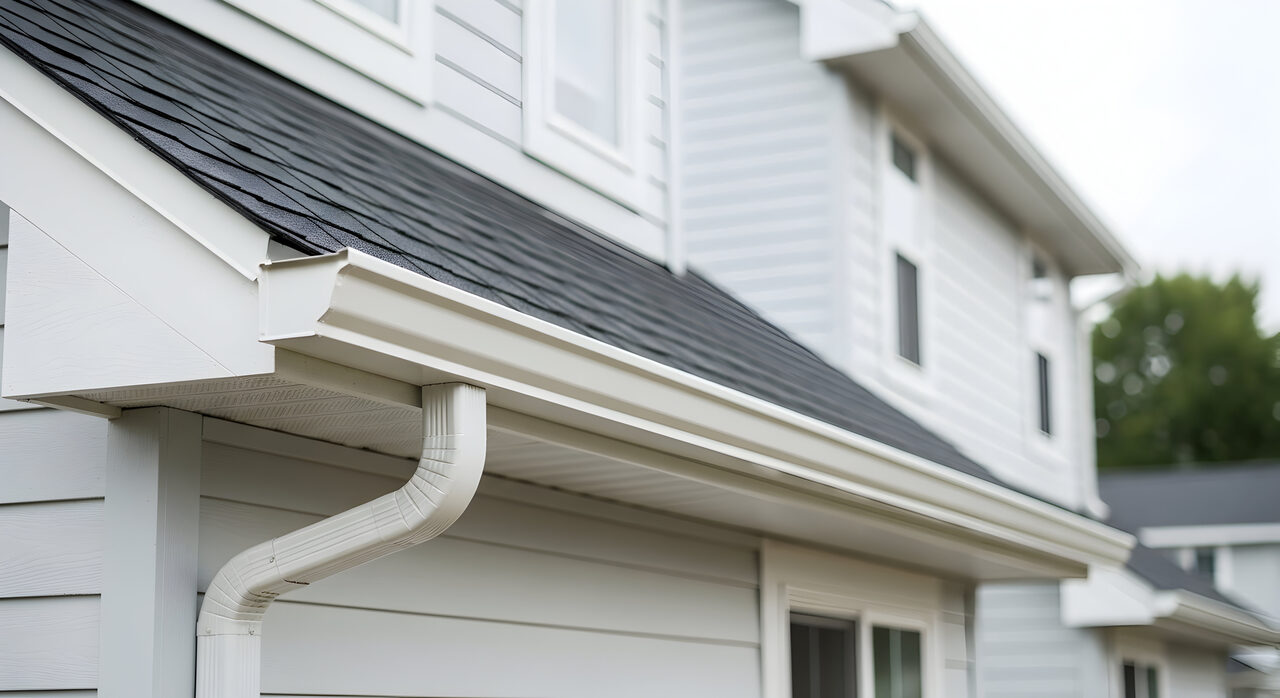
During the estimate, we measure the roof runs and review fascia condition and downspout placement. Homeowners can also compare available sizes, profiles, colors, and gutter protection options before choosing the final configuration.
Once installation begins, the gutter is formed to the required length on-site. This avoids cutting a long roof run into multiple shorter sections simply because those are the lengths available from a retailer.
Our crew then hangs and pitches each run toward its outlets. Corners and other necessary connections are sealed, downspouts are installed according to the planned layout, and the system is water-tested to confirm drainage.
We use our own full-time installation crews rather than subcontracting the gutter work. We also serve Rockford directly as part of our West Michigan service area.
If you are comparing Rockford gutter installation companies near you, ask each contractor how they determine gutter size, where they plan to place downspouts, and what happens if deteriorated fascia is found. Those answers tell you more about the installation than simply comparing linear-foot prices.
For gutter installation in Rockford, MI, we provide free written estimates and can design the system around the roof rather than forcing the property into one standard configuration. Call or text 616-532-2200 to have your roofline measured and review the gutter and downspout options for your home.
How Much Does Gutter Installation Cost in Rockford, MI?
Cost depends on total gutter length, home height, gutter size, profile, material, downspout requirements, roof access, and whether fascia work is needed beforehand. We provide free written estimates after measuring the property, which gives homeowners a project-specific price instead of relying on a broad online average.
Do I Need 5-Inch or 6-Inch Gutters on My Rockford Home?
Many residential roofs work well with 5-inch K-style gutters. Larger drainage areas, steep roof pitches, long runs, or concentrated runoff from valleys can make 6-inch gutters more appropriate. We measure the roof and consider downspout placement before recommending a size.
Can New Gutters Be Installed if My Fascia Is Rotted?
Damaged fascia should be addressed before new gutters are secured to it. We provide soffit and fascia repair and replacement when necessary. A new gutter needs a sound mounting surface, so repairing deteriorated areas first can prevent attachment problems after installation.
Do New Seamless Gutters Still Need Cleaning?
Yes. Seamless construction reduces joints along straight runs, but leaves, pine needles, roof grit, and other debris can still enter an open gutter. Periodic cleaning remains important for maintaining drainage. Homeowners with recurring debris can also discuss gutter protection separately after the new system has been properly sized and installed.
