
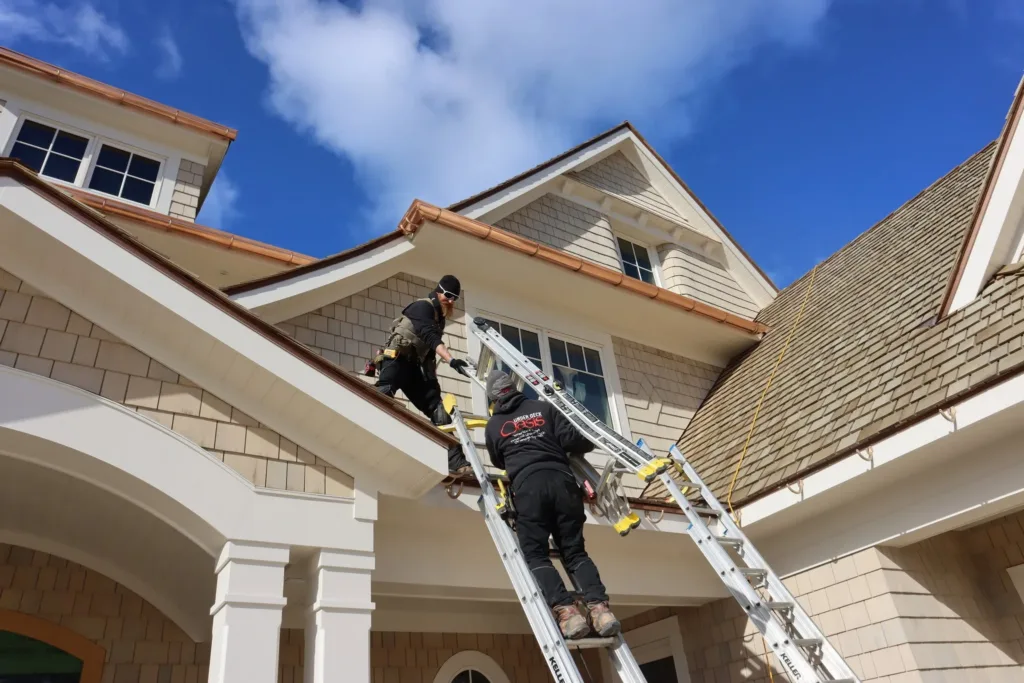
Gutter installation in Lowell, MI should be planned around how water actually moves across your roof. Roof area, pitch, valleys, gutter-run length, fascia condition, and available downspout locations can all change the system a home needs.
At All Gutter Systems, we have served West Michigan since 1988 and install seamless gutters throughout Lowell. We roll-form aluminum gutters at the property in multiple sizes, profiles, and colors.
A replacement should do more than put new metal where the old gutter sat. The layout should correct existing drainage limitations and give roof runoff a clear route from the eaves to an appropriate discharge point.
How Do You Know When New Gutters Make More Sense Than Another Repair?
New gutters make more sense when failures are spread across several runs, sections repeatedly sag or pull loose, drainage capacity is inadequate, or the existing system has already needed repeated repairs. One isolated leak may still be repairable, so we evaluate the overall condition before recommending replacement.
A leaking corner alone does not mean every gutter needs to come down. The same is true for one loose hanger or damaged downspout.
Replacement becomes more reasonable when several problems appear together. Multiple sagging runs, recurring leaks, widespread attachment trouble, or poor drainage across the system can indicate that continued repairs offer less value.
Capacity is another reason to consider a new layout. A gutter can be structurally sound yet still overflow because the roof sends more water into the run than the gutter and outlets can move.
Fascia condition also affects the decision. We note that some older Lowell homes near the Flat River have deteriorated fascia that must be rebuilt before new gutters can hang correctly.
The goal is not to replace gutters because they are old. It is to determine whether the existing system can still do its job reliably and whether repairing it addresses the real problem.
How Should New Gutters Be Sized and Laid Out for a Lowell Home?
A new gutter system should be sized around roof area, pitch, valley locations, run length, and available outlets. We roll-form 5-, 6-, and 7-inch gutters, so Lowell homeowners are not limited to one standard size when the roof requires additional capacity or a different downspout layout.
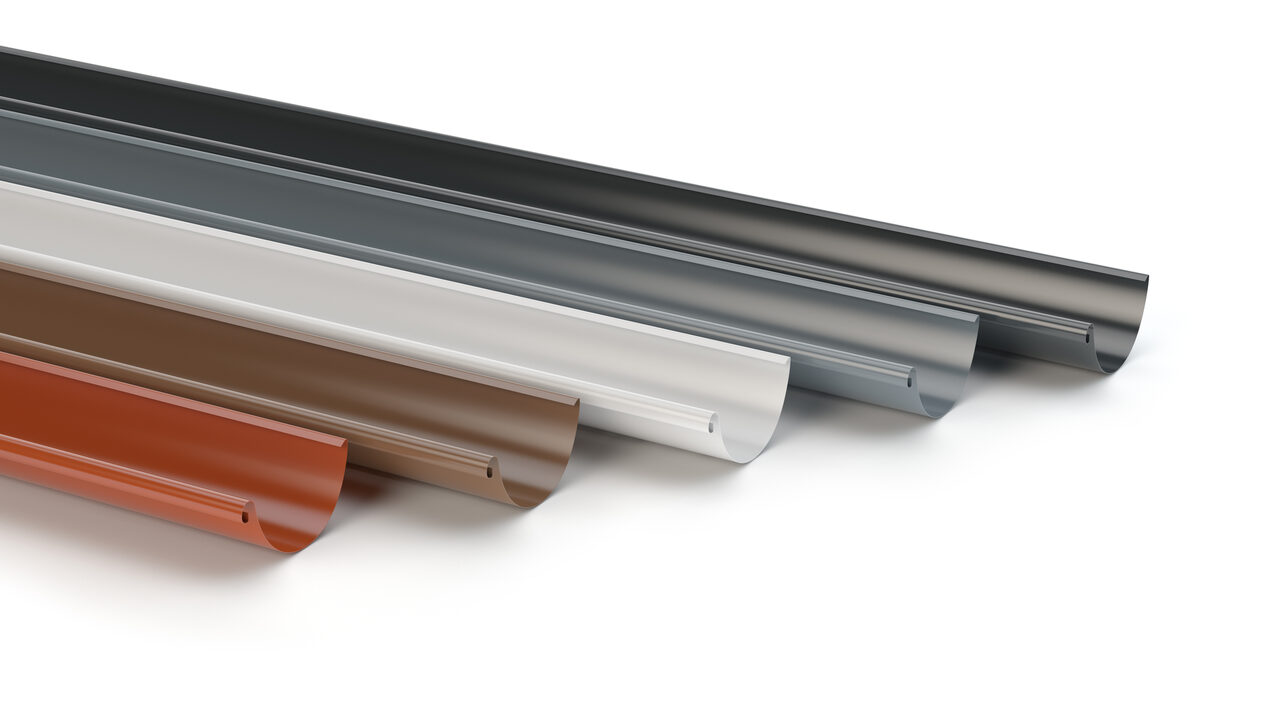
Five-inch K-style gutters work for many homes. However, roof design can make larger capacity useful even when two houses have similar square footage.
Important design factors include:
- Large roof areas feeding one gutter run
- Steep slopes that deliver runoff quickly
- Valleys concentrating water into one corner
- Long runs with few practical downspout locations
- Existing areas that regularly overflow during rain
Six-inch gutters can provide additional capacity for roofs with those conditions. Seven-inch systems are generally reserved for specialty, commercial, or unusually high-volume applications.
Downspouts need to be considered at the same time. Installing a larger gutter without enough outlet capacity can leave the real bottleneck unchanged.
This is why an estimate based only on linear footage does not tell the whole story. The installer should understand how much roof feeds each run and where that water can leave the system.
When comparing installation estimates for your Lowell home, ask how the contractor arrived at the proposed gutter size and downspout layout.

Why Does Downspout Placement Matter During Gutter Installation?
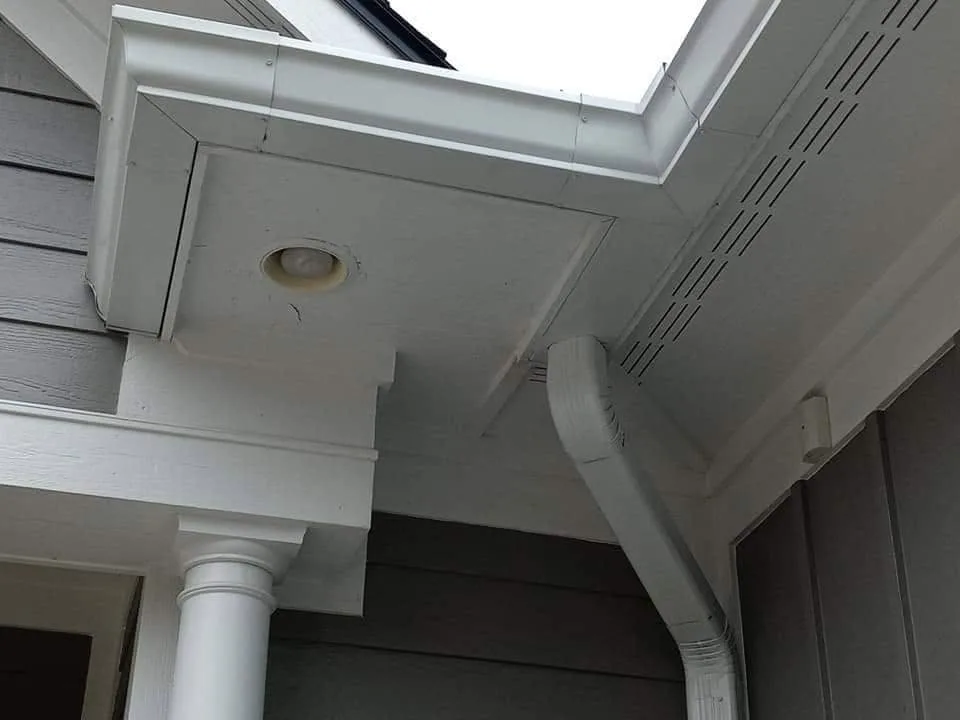
Downspouts determine whether collected roof water can leave the gutter efficiently and where it ends up afterward. A well-sized gutter can still struggle when long runs have too few outlets or discharge points send water toward a low area. Downspout planning should therefore happen before the gutters are fabricated and installed.
Think of the gutter and downspout as one drainage system rather than separate components.
A roof valley may deliver substantial runoff into one short section. If the nearest downspout is too far away, water has to travel farther through the gutter before it can exit.
Ground-level conditions matter too. The U.S. Department of Energy’s gutter and downspout guidance explains how the discharge path helps carry roof water away from the foundation.
A downspout should not be positioned only because that spot is convenient for the installer. Existing walkways, patios, landscaping, low areas, and places where water already collects should influence the final discharge plan.
In some cases, moving an outlet or adding another downspout can improve the layout more effectively than simply installing a larger gutter.
We also offer underground drainage as a separate service when a property needs a better route for downspout water after it reaches ground level. That option should be considered separately from the gutter itself because underground drainage does not solve every grading or groundwater problem.
For rain gutter installation in Lowell, MI, planning where the water finishes its journey is just as important as collecting it at the roof edge.

What Happens During Seamless Gutter Installation?
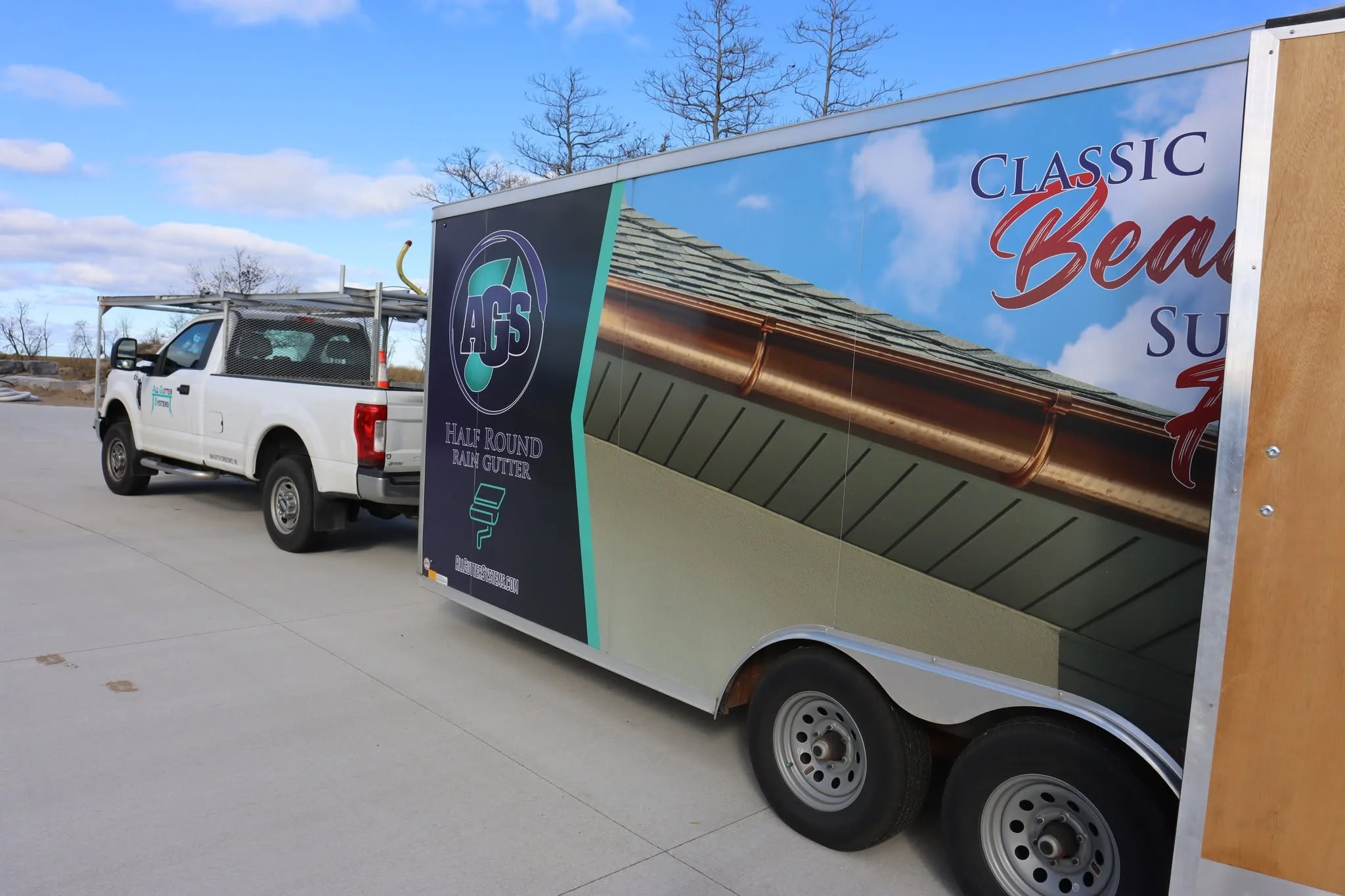
We measure the roof runs, evaluate fascia condition, plan gutter size and downspout locations, and then roll-form seamless sections at the property. Our full-time crews install and pitch the gutters toward their outlets. Homeowners can also choose among several profiles, colors, materials, and protection options before installation begins.
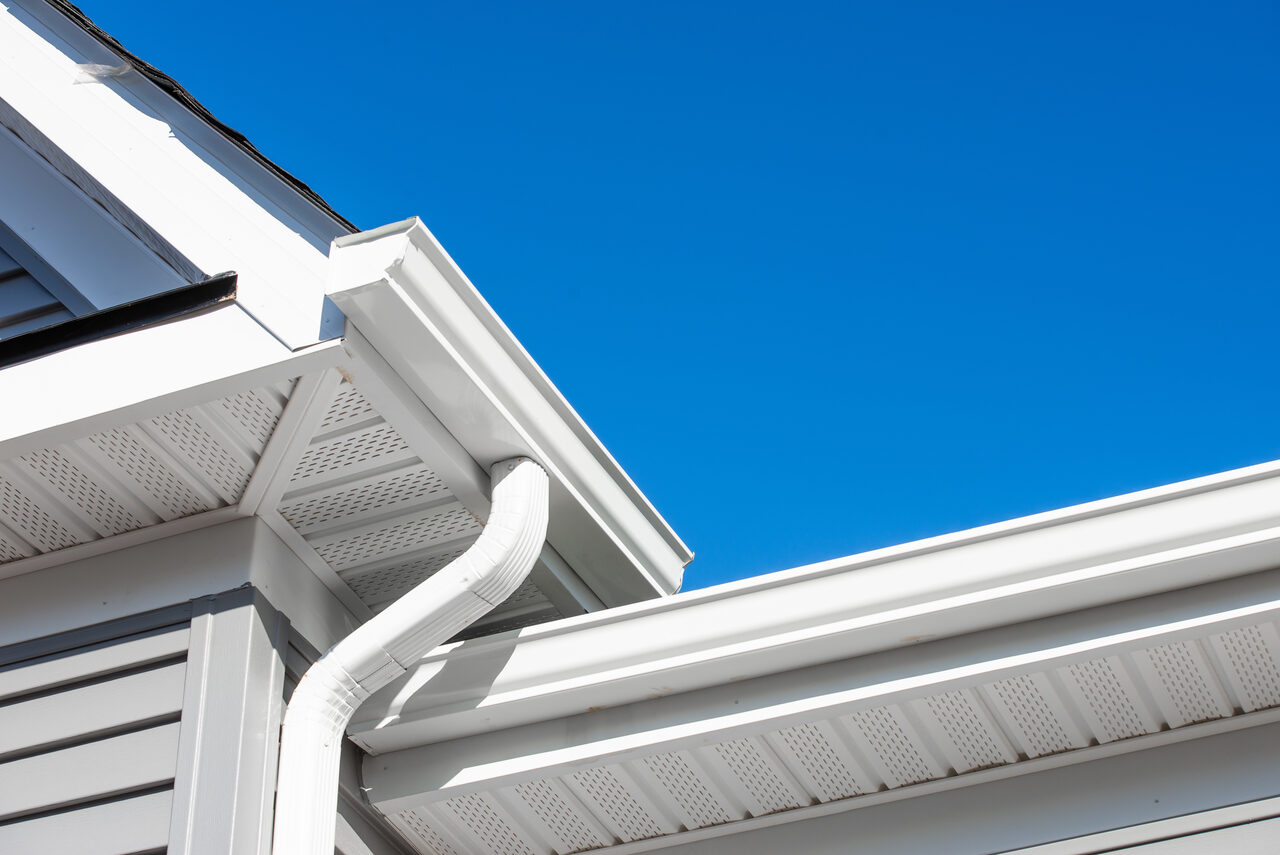
On-site fabrication is one of the main differences between seamless and sectional gutters.
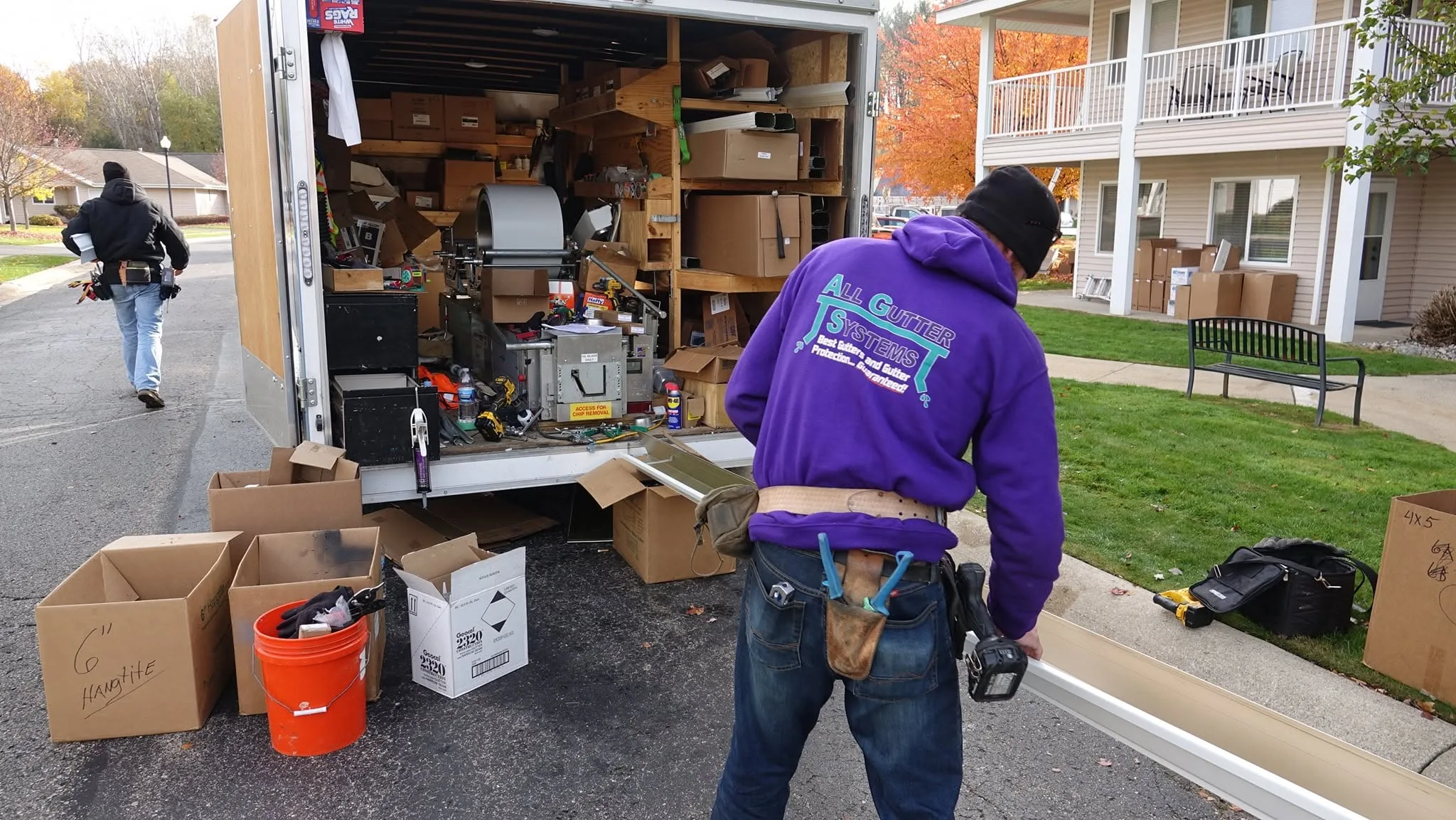
Instead of assembling a long roof run from several short pieces, aluminum coil moves through a roll-forming machine. Our crew produces a continuous section sized for that part of the house.
That reduces unnecessary joints along straight runs. Corners, end caps, outlets, and other transitions still require connections, so “seamless” does not mean the entire system contains no seams.
We currently offer 5-, 6-, and 7-inch K-style gutters, along with several decorative profiles. More than 60 gutter and downspout colors are available, and certain profiles can also be fabricated in copper.
Before new gutters go up, the fascia needs to provide a suitable attachment surface. Damaged areas may require repair first rather than covering weak wood with new aluminum.
Once the layout is installed, the gutter and downspout system should provide a clear route for roof runoff. Gutter guards can also be discussed at this stage when recurring tree debris creates a separate maintenance concern.
If you need gutter installation in Lowell, MI, call or text us at 616-532-2200. Request a free written estimate based on your roofline, runoff patterns, fascia condition, and downspout needs rather than settling for a one-size-fits-all replacement.
Should I Choose 5-Inch or 6-Inch Gutters for My Lowell Home?
Five-inch K-style gutters are suitable for many residential roofs. Six-inch gutters may make more sense when larger roof areas, steep slopes, long runs, or valleys concentrate additional runoff. We consider the roof and available downspout locations before recommending a size.
Are Seamless Gutters Completely Free of Seams?
No. Seamless gutters eliminate unnecessary joints along straight horizontal runs, but connections remain at corners, end caps, outlets, and other transitions. Fewer mid-run joints can reduce potential leak points compared with a system assembled from many short sectional pieces.
Can New Gutters Be Installed Over Rotted Fascia?
Damaged or rotted fascia should be addressed before new gutters are secured to that area. We provide soffit and fascia repair and replacement. New gutters still need a solid mounting surface, so covering deteriorated wood does not correct the underlying attachment problem.
Can Gutter Guards Be Installed With New Seamless Gutters?
Yes. We offer several gutter protection systems that can be installed with new gutters. The appropriate option depends on nearby trees, roof debris, roof design, and maintenance needs. Gutter guards control debris, however, and should not be used to compensate for inadequate gutter capacity.
Explore gutter services in Lowell to compare installation, repair, cleaning, and protection options for your home.
